
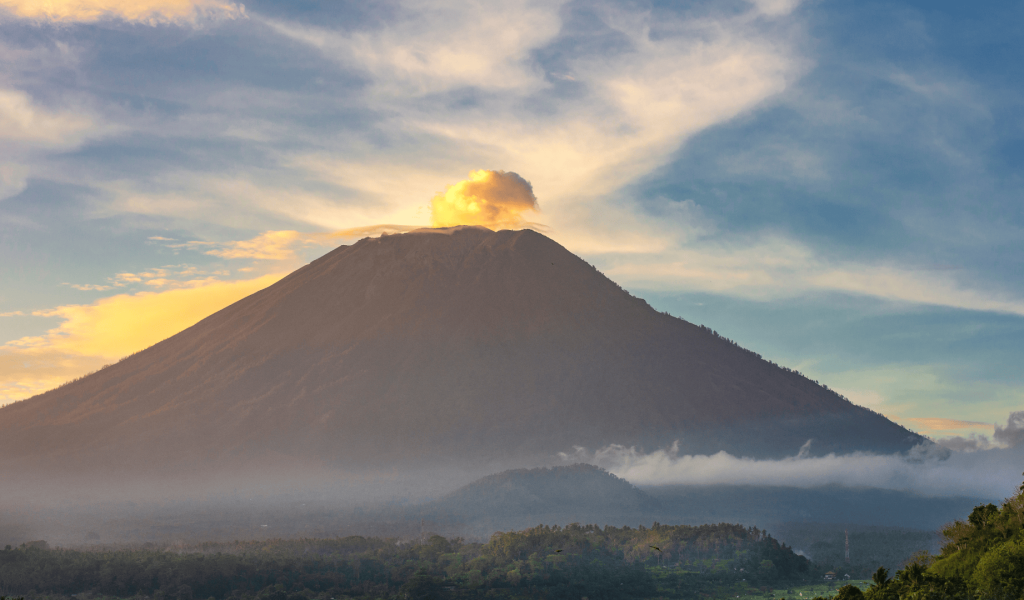
Mount Agung: Bali’s Sacred Volcano and Ultimate Hiking Challenge
Mount Agung is an active volcano and the highest peak in Bali, standing at 9,944 feet (3,131 meters) above sea level. This majestic mountain is considered the most sacred site in Balinese culture, as it is home to the island’s oldest and mother temple, Pura Besakih, located on its slopes.
The Sacred Significance of Mount Agung
Balinese Hindus believe that Mount Agung is the spiritual center of the island, making it an important place for religious rituals and ceremonies. The mountain has also played a major role in shaping Bali’s history, including the eruption that destroyed Tirta Gangga, a famous royal water palace.
Fun Fact: Mount Agung’s Impact on Climate
Did you know that Mount Agung affects its surrounding climate? Its western slopes catch rain clouds, making the west side lush and fertile, while the eastern slopes remain dry and barren. Lower areas of the mountain are covered in dense green forests, but as you ascend, the landscape transforms into a desolate expanse of volcanic rock and ash.
Hiking Mount Agung: A Challenging Adventure
Hiking Mount Agung is one of the most challenging yet rewarding experiences in Bali. There are two main hiking routes, each offering a different level of difficulty:
The Pura Pasar Agung Trail (4-5 hours)
– Starts at 1,700 meters above sea level
– Ends at the Mount Agung crater rim (2,866 meters)
– Considered the easier and shorter route, making it the more popular choice among hikers
The Pura Besakih Trail (6-8 hours)
– Begins at 1,200 meters and takes you to the absolute summit (3,131 meters)
– Known for being brutally challenging, only recommended for those who are physically fit and well-prepared
– Less crowded, allowing for a more peaceful and rewarding summit experience
Looking for an easier alternative?
If hiking Mount Agung sounds too intense, consider climbing Mount Batur, which offers a similar sunrise experience but with a much easier and shorter hike.
Best Time to Visit Mount Agung
The best months for good weather in the Mount Agung area are June to October. If you want to witness a breathtaking sunrise from the summit, you’ll need to start your hike very early—around 1 AM, depending on the trail you choose.
How to Get There
The best way to reach Mount Agung for a sunrise hike is by booking a guided tour. A guide will:
– Pick you up from your hotel
– Take you to the trailhead
– Accompany you on the hike while providing valuable information about the volcano
While it is technically possible to hike Mount Agung independently, it is strongly recommended to go with an experienced guide for safety reasons.
How to Capture the Best Photos
If you’re brave and fit enough to reach the summit, you’ll be rewarded with breathtaking views over Bali at sunrise. The best time to capture stunning photos is right before and during sunrise, as the golden hues paint the sky above the island.
Essential Hiking Tips
– Book a guide or a guided tour—hiking solo is too dangerous
– Wear warm clothes and sturdy hiking shoes
– Bring enough water and snacks to keep your energy levels up
Conclusion: Why You Should Visit Mount Agung
Whether you’re a spiritual seeker, adventure enthusiast, or nature lover, Mount Agung offers a one-of-a-kind experience. Its sacred significance, stunning landscapes, and challenging hikes make it an unmissable destination in Bali.
📍 Are you ready to take on the challenge? Add Mount Agung to your Bali bucket list today!